Treatment for Anxiety and Panic Attacks

When therapy or medication hasn’t quieted the worry, psychedelic-assisted therapy may help, with an experienced therapist beside you at every step. At 8 clinics across Ontario, BC and Quebec.

A woman sitting calmly on a park bench in soft morning light, finding calm with the help of ketamine therapy

When your mind won't switch off

Anxiety keeps your body braced for danger that never arrives. Your mind races, your chest tightens, and ordinary plans start to feel like too much. It isn’t a weakness, and you don’t have to keep pushing through it alone.

Many people find us after therapy or medication has helped only so much. Psychedelic-assisted therapy gives us another way to help when progress has stalled.

Does this sound like you?

Anxiety is on the rise: about 1 in 20 Canadians met the criteria for generalized anxiety disorder in the past year, double the rate in 2012.¹ It shows up differently for different people.

Generalized anxiety

Worry that’s hard to control, about many different things, on most days for six months or more.

Panic attacks

Sudden waves of intense fear that peak within minutes, sometimes out of nowhere.

Whichever one sounds like you, you’re not alone, and anxiety is treatable, even when it’s been there for years.

A woman with her hand to her head against a soft pink wall, feeling the weight of anxiety before ketamine therapy

Who we help

Anxiety shows up in many different lives. Our team works with it every day, including:

Constant worry and overthinking. When your mind keeps running through everything that could go wrong.

Panic attacks. Including the fear of the next one, and the places you’ve started to avoid.

Anxiety alongside depression. When worry and low mood feed each other, and treating one hasn’t fixed the other.

Anxiety after trauma. When your body stays on alert long after something frightening happened.

Work stress and burnout. When pressure at work has turned into anxiety that follows you home.

Anxiety you’ve lived with for years. Sometimes since childhood, so it feels like part of who you are.

Already tried first-line anxiety treatment?

If you’re reading this, you’ve probably tried at least one of the treatments that Canadian guidelines recommend first.² Many people who come to us have done therapy, taken medication, or both, and still feel on edge most days.

Talk therapy. CBT is the best-studied therapy for anxiety, and it helps many people. But in a large review of trials, only about half reached remission.³

Medication. Antidepressants such as SSRIs and SNRIs are the usual first choice. Finding the right one can take several tries, and side effects lead some people to stop. Sedatives can bring short-term relief, but they aren’t meant for long-term use. Your family doctor or psychiatrist prescribes them, and we coordinate with your prescriber.

Lifestyle and support. Slow breathing, exercise, sleep and less caffeine all help. They make a difference, but they rarely calm long-standing anxiety on their own.

If you’ve done the work and your mind still won’t settle, it isn’t a failure on your part. Anxiety that hasn’t responded to first-line treatment is common, and that’s where other options come in.

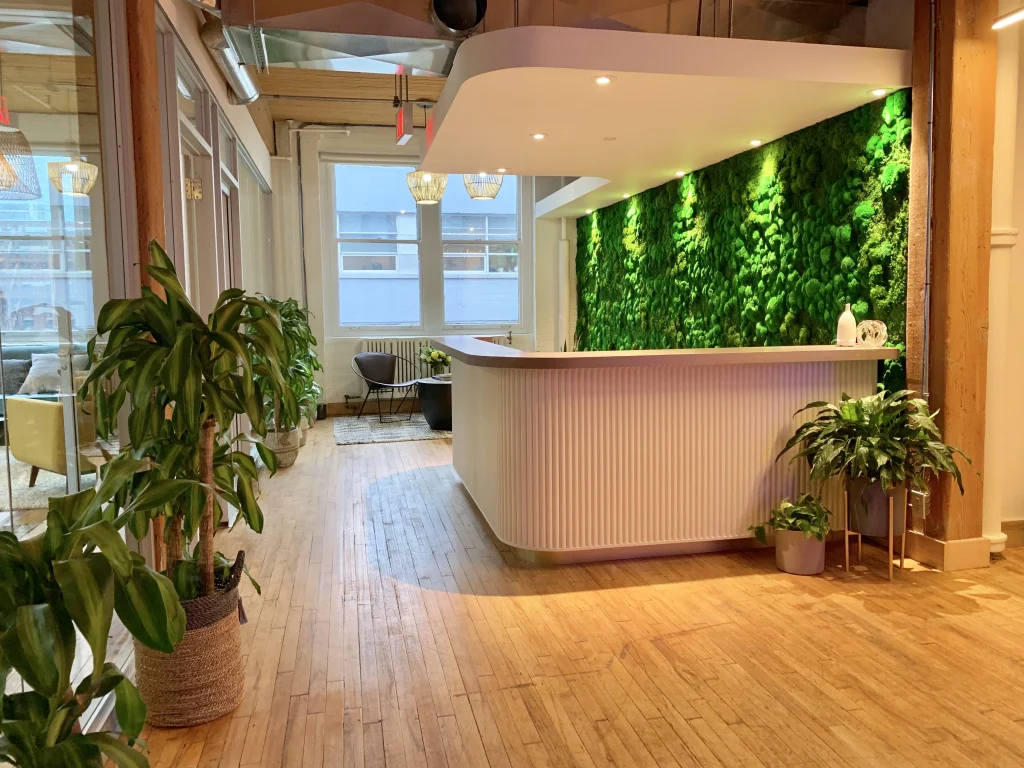
Reception desk, green moss wall and plants at Field Trip Health's Toronto ketamine therapy clinic
Field Trip Vancouver clinic room with a white recliner, yellow armchair and city view, used for ketamine therapy

When therapy and medication aren't enough: psychedelic-assisted therapy

Psychedelic-assisted therapy pairs a low dose of a legally prescribed medicine, given in a medically supervised clinic, with psychotherapy before, during and after each session.

Most anxiety medications work on serotonin, or calm the nervous system for a few hours. This medicine works differently, on glutamate, the brain’s main messenger chemical. Research suggests it helps the brain form new connections, which may loosen long-held patterns of fear and worry.

A 2022 review of studies in people whose anxiety hadn’t responded to other treatments found the medicine eased anxiety quickly, with effects lasting up to about a week after a single dose.⁴ Research is still growing, and results vary from person to person.

That short window is why therapy matters so much. Every session includes integration time with your therapist before and after the medicine portion, and your therapist stays in the room with you throughout, so what you learn has a chance to last.

What to expect at Field Trip Health

Every step is planned with you, and you can ask questions at any point.

1

A free discovery call. Talk with our Care Team about what you’ve been feeling and what you’ve tried. No referral needed.

2

A medical assessment. Our Medical Team reviews your health, medications and symptoms, using standard measures like the GAD-7 anxiety questionnaire.

3

Preparation. You meet your therapist, set goals and learn what sessions feel like, so nothing comes as a surprise. For people with anxiety, this step matters a lot.

4

Psychedelic-assisted sessions. Each session has three parts: integration time with your therapist before the medicine, the medicine experience itself in a calm, private room, and integration time afterward to make sense of what came up. Your therapist stays with you throughout, while medical staff monitor you.

5

Carrying it forward. Your therapist helps you turn what you learn into change in daily life, and we repeat the GAD-7 so you can see what’s changing.

The bright reception desk at Field Trip Health's Vancouver clinic for psychedelic and ketamine therapy

Is psychedelic-assisted therapy safe?

With careful screening in a medical setting, it’s generally considered safe and well tolerated. Before treatment, we review your health history, medications and blood pressure. During each session, medical staff monitor you and your therapist stays with you.

Side effects are usually mild and short-lived: dizziness, nausea, a dreamlike or detached feeling, or a small rise in blood pressure. Most pass within an hour or two. Plan for someone to take you home, and don’t drive until the next day.

It isn’t right for everyone. Pregnancy, active or recent psychosis or mania, and high blood pressure or heart disease that isn’t well controlled may mean another path is safer.

A reclining chair with a weighted blanket, eye mask and headphones in a quiet room for ketamine therapy

Why choose Field Trip Health for anxiety

The same therapist, every step. One therapist prepares you, stays with you during each session and helps you make sense of it afterward. If you begin with talk therapy here, that same therapist continues with you, so you never have to retell your story to someone new.

One team around you. Therapists, nurses, physicians, nurse practitioners and psychiatrists work together, and we coordinate with your own doctor.

Experience with anxiety that’s hard to shift. Our team works every day with people whose anxiety hasn’t responded to other treatment, including panic attacks and anxiety alongside depression or trauma.

8 clinics and online care. Toronto, Ottawa, Hamilton, Kitchener-Waterloo, Thunder Bay, Sault Ste. Marie, Vancouver and Montreal, plus online therapy across Ontario, BC and Quebec.

Progress you can see. We measure your symptoms at the start and after treatment, so you and your team can see what’s changing.

A calm lake at dawn with a blanket on a wooden dock, the quiet that can follow ketamine therapy

Is psychedelic-assisted therapy right for you?

It may be worth exploring if you:

Have tried therapy, medication or both without enough relief

Still worry most days, or live with panic attacks

Have started avoiding places or plans because of anxiety

Want medically supervised care with real therapy built in

Our Medical Team looks at every person carefully. If it isn’t the right fit yet, we’ll help you find what is, whether that’s a different kind of therapy or another path.

In our clients' words

“

Prior to this, I tried various forms of therapy and several medications, none of which seemed to help. … I wholeheartedly recommend Field Trip to anyone who feels as if they have exhausted every form of treatment for depression and/or anxiety.

Sebastian
Google review

“

I did six sessions of psychedelic assisted psychotherapy during summer 2023 after struggling with debilitating anxiety and depression for many years. Other therapies and therapists did not help. … The sessions showed me what safety and inner-peace felt like.

KEW
Google review, Ottawa

“

Yes, I still deal with my symptoms of depression and anxiety, but the fact that they are no longer overwhelming says a lot.

Shay
Teacher, Toronto, read Shay’s story

“

After six sessions my general anxiety and depression have subsided, and I’m much happier.

Grant
Former military, read Grant’s story

A quiet forest path in the morning, a calm place to ease anxiety alongside ketamine therapy

Frequently asked questions

Do I need a referral for anxiety treatment?

No. You can book psychedelic-assisted therapy or talk therapy without a referral. A free discovery call with our Care Team comes first. Only an appointment with one of our psychiatrists needs a referral.

It’s normal to feel nervous beforehand. Your therapist prepares you so you know what to expect, stays with you throughout each session, and medical staff monitor you the whole time. Some people feel a wave of nerves as the medicine starts to work. It usually passes as the session goes on, and you’re never alone with it. For people with high levels of anxiety, we often start with a lower dose and increase it slowly, for the best experience.

Your prescriber may change the dose or try another medication, and therapy like CBT can be added or restarted. Psychedelic-assisted therapy is another option. On a free call, our Care Team can talk through all of your options, including ones we don’t offer.

Usually not, but tell us everything you take. Some medications, such as benzodiazepines and lamotrigine, can affect how well treatment works. We review them at your consultation and coordinate with your prescriber, and taking them doesn’t rule you out of treatment. Never stop or change a medication on your own.

It varies. Some people feel calmer within hours to days of a medicine session, while for others change builds gradually over the program. We track your symptoms along the way, so you can see what’s changing.

A program has a set number of sessions, plus preparation and integration with your therapist. Afterward, some people don’t need more sessions, while others come back for occasional maintenance sessions. We plan that with you.

OHIP, MSP and RAMQ don’t cover the psychedelic-assisted program. Extended health benefits often cover the psychotherapy part, about 50%, and some plans cover the full program. We direct bill Medavie Blue Cross, and payment plans are available.

Please reach out now. Call or text 9-8-8, the Suicide Crisis Helpline, any time. If you’re in immediate danger, call 911 or go to your nearest emergency department. Field Trip Health isn’t an emergency service.

Anxiety treatment across Ontario, BC and Quebec

See us in person at our clinics in Toronto, Ottawa, Hamilton, Kitchener-Waterloo, Thunder Bay, Sault Ste. Marie, Vancouver and Montreal, or book online therapy anywhere in Ontario, BC or Quebec.

Want to know more? Read our guide to psychedelic therapy for anxiety, or see psychedelic-assisted therapy and how to qualify.

Your path forward

Sometimes, it’s the everyday things you miss most. Saying yes to plans, a quiet mind at the end of the day, or a morning without dread.

Let’s talk about what you want to get back to.

Start with a free 15-minute discovery call

Speak with our Care Team about your needs, ask questions about treatment and costs, and explore your next steps.

en_CAEN

Start your personalized assisted-psychotherapy journey today.