


The quick answer: Psilocybin-assisted therapy in Toronto is legal only with Health Canada approval: mainly a clinical trial or its Special Access Program. Trials run at hospitals like the Centre for Addiction and Mental Health. That program needs a doctor’s request for a serious condition; section 56 exemptions are a backup. Otherwise, Field Trip Toronto offers a legal psychedelic-assisted alternative with no referral.
Maybe you’ve tried two or three medications, and the therapy too. Then you read a headline about psilocybin and wondered: could that help me, and can I get it legally in Toronto?
I’m Dr. Mario Nucci, a family physician (MD, CCFP). Needing more than your first treatments gave you is not a personal failure. Depression that hasn’t eased after two or more antidepressants even has a name: treatment-resistant depression.
This guide covers the legal routes to psilocybin in Toronto, who qualifies, what a session involves and what the research shows. It also explains the legal psychedelic-assisted therapy we offer, and how it compares with traditional methods.
Psychedelic Therapy Toronto: What’s Legal Right Now
Psychedelic therapy in Toronto is legal in some forms and not in others. The difference matters for your safety as much as for the law.
Psilocybin and MDMA Under Canadian Law
Psilocybin, the active compound in “magic mushrooms”, and MDMA are controlled under the Controlled Drugs and Substances Act (CDSA). Using them is illegal unless Health Canada authorizes it.
Psilocybin isn’t trial-only, though. A 2022 Frontiers in Psychiatry review lists three approved pathways: research (including clinical trials), the Special Access Program (SAP) and section 56 exemptions. Each one runs through a researcher, a prescriber or Health Canada.
Psychedelic-Assisted Therapy: The Legal Option Available in Toronto Today
The psychedelic-assisted approach open in Toronto today uses a legal anesthetic, prescribed off-label and given under medical supervision. It’s paired with preparation before and integration after.
Some clients describe meaningful shifts with treatment-resistant depression and anxiety, though responses vary. Read why we work with psychedelic medicines, or start with psychotherapy.
Psilocybin-Assisted Therapy in Toronto: The Three Legal Routes
If you want psilocybin itself, these are your options. Each has its own gatekeeper and limits.
Route 1: Psilocybin Clinical Trials in Toronto
Toronto’s psilocybin trials run at the Centre for Addiction and Mental Health (CAMH) and the University Health Network (UHN), which includes Toronto Western Hospital and Princess Margaret Cancer Centre.
| Trial | Where | Who it’s for | Status, November 2026 |
|---|---|---|---|
| NCT07405606 | CAMH | Major depressive disorder plus alcohol use disorder | Recruiting |
| NCT06518720 (TRANSCEND) | CAMH | Chronic neuropathic pain plus treatment-resistant depression | Recruiting |
| NCT07211438 | CAMH and Toronto Western Hospital | Treatment-resistant depression | Recruiting |
| NCT06341426 | UHN (Toronto Western) and CAMH | Treatment-resistant depression: one dose vs two | Active, not recruiting |
| NCT06416085 (PEARL) | Princess Margaret Cancer Centre | Advanced (stage IV) cancer | Active, not recruiting |
Trials open and close often. Search Health Canada’s clinical trials database for new ones. Each record lists the study team’s contacts.
Route 2: Health Canada’s Special Access Program
The SAP lets a licensed practitioner ask Health Canada for an unapproved drug for one patient. Since January 2022, that has included psilocybin and MDMA. According to Health Canada’s notice, the request must show:
- You have a serious or life-threatening condition.
- Conventional treatments have failed, are unsuitable or are unavailable.
- There’s enough evidence for the drug’s use, safety and efficacy in your condition.
Handling psilocybin also needs an exemption under subsection 56(1) of the CDSA, and a class exemption covers some SAP cases. The drug must be used in the presence of the practitioner, or a health professional they delegate, so you can’t take it home. Each request is reviewed case by case.
Route 3: Section 56 Exemptions
Health Canada can grant an exemption for a specific medical or scientific purpose, or in the public interest. Before 2022, this was the only route outside research. The Frontiers review says patients had to source psilocybin illicitly and waits reached up to 300 days. It’s now a secondary route, used after an SAP request is denied.
Why Underground Mushroom Therapy Isn’t the Same as Psilocybin-Assisted Therapy
Outside these routes, possessing psilocybin is illegal in Canada. Unregulated mushrooms meet no quality standard, so you can’t be sure what you’re taking.
You’d also miss what makes it therapy: medical screening, plus preparation and integration with a therapist. Health Canada notes that the setting plays an important role in reducing the psychological risk.
Can’t get into a trial? You don’t need a referral. Speak with our Care Team to see whether psychedelic-assisted therapy could be a fit for you.
What a Psilocybin-Assisted Therapy Session Involves
Psilocybin-assisted therapy isn’t just a dose. The Frontiers review describes three stages: before, during and after treatment.
Preparation, the 25 mg Dosing Day and Integration
- Preparation. You build trust with your therapists and learn what to expect, in your mind and in the room.
- The dosing day. All five Toronto trials use a 25 mg dose. One UHN record describes two therapists supporting the patient for 6 to 8 hours.
- The ride home. Several trials need a support person to take you home. Two ask them to stay at least 24 hours.
- Integration. Later sessions help you make sense of the experience and bring it into daily life.
Effects usually begin 20 to 40 minutes after the dose, peak at 60 to 90 minutes and last 4 to 6 hours, according to the review.
What Psilocybin-Assisted Therapy Can Feel Like from the Inside
No one can promise how your session will go. Health Canada says psychedelic drugs produce an altered state that can last for hours and may affect your emotions.
Sessions often use music, meditation and breath work, with therapists who support rather than steer. Anxiety or confusion can come and go, and strong fear is less common but possible. In a 2016 cancer study, the “mystical” quality of the experience helped explain the improvement.
Think of preparation as the map and integration as the unpacking. Neither end is optional.
How Many Sessions and How Long It Takes
Most Toronto trials give one dose. NCT06341426 tests one dose against two, measuring results at week 8 with six months of follow-up. The CAMH alcohol and depression trial involves 14 visits and follows people to week 26. So plan for months, not one afternoon.
Who Qualifies for Psilocybin-Assisted Therapy in Toronto, and Who Doesn’t
Criteria vary by trial, so read each record. These patterns repeat across the five Toronto trials.
Common Eligibility Criteria in Toronto Trials
- Adults, usually 18 to 65 (one trial goes to 70).
- A confirmed diagnosis, such as major depressive disorder.
- For treatment-resistant depression, no response to two or more antidepressants.
- Able to read and communicate in English.
- Willing to taper some medications, such as antidepressants, for at least 2 weeks, when your physician confirms it’s safe.
Never stop or change a medication on your own. Plan any taper with your prescriber.
Common Exclusions and Medication Interactions
- A personal or family history of psychosis, schizophrenia or bipolar disorder.
- Heart problems, such as a prolonged QTc on an ECG or a recent heart attack.
- Uncontrolled high blood pressure (two trials set the limit at 160/100).
- Moderate to severe liver or kidney impairment.
- Pregnancy or breastfeeding.
- Recent psychedelic use (6 months to 5 years, by trial).
- Active suicidal thoughts with intent or a plan.
The Frontiers review says SSRIs and MAOIs may weaken the experience, and it advises careful screening of antidepressants, antipsychotics, stimulants and lithium.
What the Research Says About Psilocybin-Assisted Therapy, Honestly

The research is promising, and it’s still early. Here are four key trials, with their limits.
- Treatment-resistant depression. In a 2022 NEJM trial of 233 adults, a single 25 mg dose lowered depression scores by 12.0 points at week 3, against 5.4 with a 1 mg dose. The benefit didn’t clearly hold at 12 weeks. A CAMH and University of Toronto psychiatrist co-authored it.
- Psilocybin vs an antidepressant. A 2021 NEJM trial of 59 people compared psilocybin with escitalopram. The main measure didn’t differ significantly. Some secondary measures favoured psilocybin, without correction for multiple comparisons.
- Cancer-related distress. In a 2016 trial of 29 people, one dose with psychotherapy brought rapid relief. At 6.5 months, about 60 to 80% still had clinically significant reductions in depression or anxiety.
- Alcohol use disorder. In a 2022 JAMA Psychiatry trial of 95 adults, the psilocybin group drank heavily on 9.7% of days over 32 weeks, against 23.6% with active placebo.
As the 2022 NEJM authors wrote, larger and longer trials are still needed.
Side Effects and Safety of Psilocybin-Assisted Therapy
The Frontiers review lists common short-term effects: raised blood pressure and heart rate, headache, nausea, anxiety and confusion. Headaches can appear the next day.
The main risk is psychological: distress and, rarely, psychosis. Well-screened trials report no serious adverse events, but risk isn’t zero. In the 2022 NEJM trial, 77% had an adverse event, and suicidal thoughts or self-injury occurred in every dose group. That’s why medical supervision matters.
When Psilocybin Isn’t Enough or Isn’t Right for You
You may not fit a trial, or not respond. That doesn’t mean you’ve run out of road. Talk therapy and medication remain first-line treatments. A psychiatry consultation at Field Trip needs a referral from your doctor or nurse practitioner, and it’s covered by OHIP in Ontario.
Psilocybin-Assisted Therapy vs Psychedelic-Assisted Therapy at Field Trip Toronto
Here’s how the routes compare. For more, read legal psychedelics vs psilocybin therapy.
| Psilocybin trial | Psilocybin through the SAP | Psychedelic-assisted therapy at Field Trip Toronto | |
|---|---|---|---|
| How you get access | Meet the criteria and enrol after screening | A practitioner applies to Health Canada | Our Medical Team approves you |
| Referral | Set by each trial | You need a prescriber willing to apply | No referral needed |
| First step | Screening visits | Showing other treatments failed or are unsuitable | A preparation session |
| Therapist continuity | Study therapists; some trials pause outside therapy | Depends on the practitioner | The same therapist continues |
MDMA-Assisted Therapy in Toronto: Still Investigational
MDMA-assisted therapy is still investigational in Canada, and Field Trip doesn’t offer it (see our MDMA in Canada guide). Brian Fernandes, a Registered Social Worker at our Toronto clinic and a Canadian Armed Forces reservist, is trained in MDMA-assisted psychotherapy. That’s a credential, not a service.
Psilocybin-Assisted Therapy vs Antidepressants
If you’re on an antidepressant now, you may be wondering whether psilocybin would simply work better. Honestly, we don’t know yet. In a 2021 NEJM trial of 59 people, psilocybin didn’t differ significantly from escitalopram, a common SSRI, on the main depression measure.
The two can also get in each other’s way. The Frontiers review says SSRIs may weaken the psilocybin experience, and Toronto trials ask some people to taper antidepressants for at least 2 weeks, only when their physician confirms it’s safe. Staying on your medication while you explore options isn’t failing. For the bigger picture, read psychedelic therapy vs SSRIs.
The Therapeutic Process at Field Trip Health Toronto
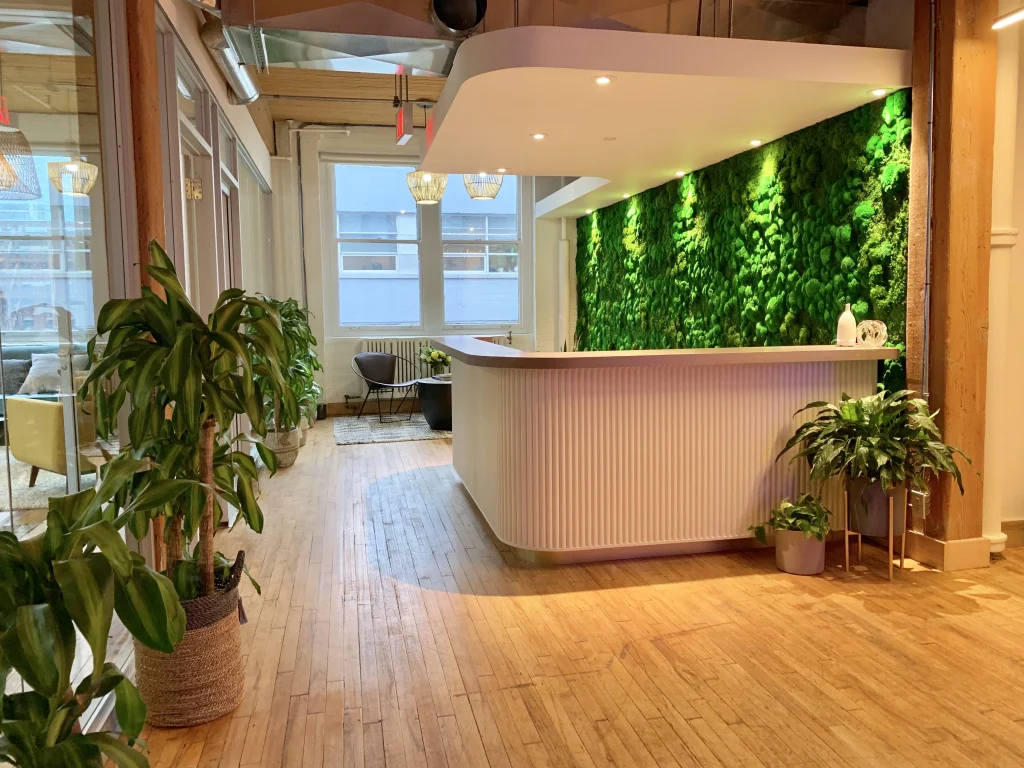
Field Trip Health Toronto is at 30 Duncan Street in the Entertainment District, in a 1926 building with a CN Tower view. Care follows four steps.
Initial Assessment and Preparation
Our Medical Team assesses and approves each patient, screening your history and goals. Then a preparation session comes before any treatment session.
The Psychedelic-Assisted Therapy Session
Sessions are medically supervised, in a calm room, with a trained therapist guiding you. Clients may experience non-ordinary states that open space for reflection, with treatment-resistant depression, PTSD or anxiety.
Psychedelic Integration Sessions with the Same Therapist Throughout
In integration, you and your therapist turn insights into daily change, using approaches such as cognitive behavioural therapy. The same therapist continues with you throughout, so you never retell your story.

Conditions Treated with Psychedelic Therapy in Toronto
We treat depression, anxiety, PTSD and trauma, OCD, chronic pain, eating disorders and addiction. Here’s where Toronto’s psilocybin research fits.
Treatment-Resistant Depression and Anxiety
Treatment-resistant depression is the most studied condition, and three of Toronto’s five psilocybin trials focus on it. At Field Trip, psychedelic-assisted therapy may help when other treatments haven’t been enough, though responses vary.
Psychedelic Therapy for PTSD and Trauma in Toronto
MDMA-assisted therapy for PTSD is still investigational in Canada (our MDMA guide explains). What’s available now is legal psychedelic-assisted therapy, with therapy to process trauma safely.
We’re proud to work closely with veterans, first responders, healthcare workers and Indigenous communities. Brian Fernandes, a Canadian Armed Forces reservist, works with PTSD on our Toronto team. Read more on psychedelic-assisted therapy for PTSD.
Chronic Pain and Illness
Chronic illness and persistent pain take a mental toll. Psychedelic-assisted therapy may help some people reframe their relationship with pain. CAMH’s TRANSCEND trial is testing psilocybin for neuropathic pain with treatment-resistant depression.
Addiction and Alcohol Use
In the 2022 alcohol trial, psilocybin plus psychotherapy cut heavy drinking days. CAMH’s NCT07405606 now tests it for depression with alcohol use disorder. Compare psychedelic therapy vs naltrexone for alcohol use disorder.
How to Choose a Psychedelic Therapy Provider in Toronto: Questions to Ask
Ask any provider these questions. Here are our answers.
- Is it legal? Yes. We don’t offer psilocybin or MDMA.
- Who decides if it’s right for me? Our Medical Team.
- Will I be prepared? Yes, a preparation session comes first.
- What happens afterwards? Integration sessions with your therapist.
- Will I keep the same therapist? Yes.
- Where and when? 30 Duncan Street, Suite 400, Monday to Friday, 9am to 7pm. Paid parking is at 211 Adelaide Street West, and online sessions cover Ontario, BC and Quebec.
How to Start Psychedelic-Assisted Therapy in Toronto
No Referral Needed: Self-Referral and Medical Team Approval
Start through our booking page or by contacting our clinic directly. No referral is needed. Our Medical Team reviews your history and goals before approving care.
Starting with Talk Therapy
Many people start with talk therapy, in person or virtual, usually within a week and often claimable on benefits. Our therapists peel back the layers of the onion. If therapy alone isn’t enough, your therapist helps you decide, and stays with you. There’s no wrong way to start.
“Franklin and his team on site are just wonderful people, and so knowledgeable”
Mia T., Google review
Finding Your Way Forward in Toronto

Psilocybin-assisted therapy in Toronto is real, regulated and still early. If a trial fits, it may be worth pursuing. If not, legal options are open now, including stellate ganglion block, neurofeedback therapy and repetitive transcranial magnetic stimulation (rTMS).
Healing rarely follows a straight line. Wherever you start, you don’t have to work it out alone.
Psilocybin-Assisted and Psychedelic Therapy in Toronto: FAQ
Psilocybin and MDMA are legal in Toronto only through Health Canada-authorized clinical trials, the Special Access Program or a section 56 exemption. Psychedelic-assisted therapy using a legal anesthetic, prescribed off-label under medical supervision, is legal at Field Trip Health Toronto.
Yes, but only through a clinical trial, such as those at CAMH and UHN, or if a doctor gets Health Canada approval through the Special Access Program. Field Trip doesn’t offer psilocybin, but offers legal psychedelic-assisted therapy with no referral.
Search Health Canada’s clinical trials database or ClinicalTrials.gov for Toronto psilocybin studies, then contact the study team listed in the record. Criteria vary by trial and usually include a confirmed diagnosis and screening visits.
Psychedelic-assisted therapy may help some people with PTSD in Toronto when talk therapy or medication hasn’t been enough, though responses vary. Our Medical Team assesses each person first, and sessions are paired with preparation and integration.
No, psychedelic-assisted therapy at Field Trip Toronto needs no referral, and our Medical Team assesses and approves each patient. A preparation session always comes before any treatment session.
No, at Field Trip your talk therapist can continue with you into psychedelic-assisted sessions, so you never retell your story. Many people start with talk therapy, usually within a week. Call our Toronto clinic at (647) 933-4770.
Wondering if psychedelic therapy in Toronto is right for you?
There’s no wrong way to start, and no referral is needed. Speak with our Care Team to ask your questions and see whether psychedelic-assisted therapy could be a fit for you.
Field Trip Health Toronto: 30 Duncan Street, Suite 400, Toronto, ON M5V 2C3. Monday to Friday, 9am to 7pm.
Prefer to talk first? Call (647) 933-4770, email toronto@fieldtriphealth.ca, contact us or book online.
About the Author
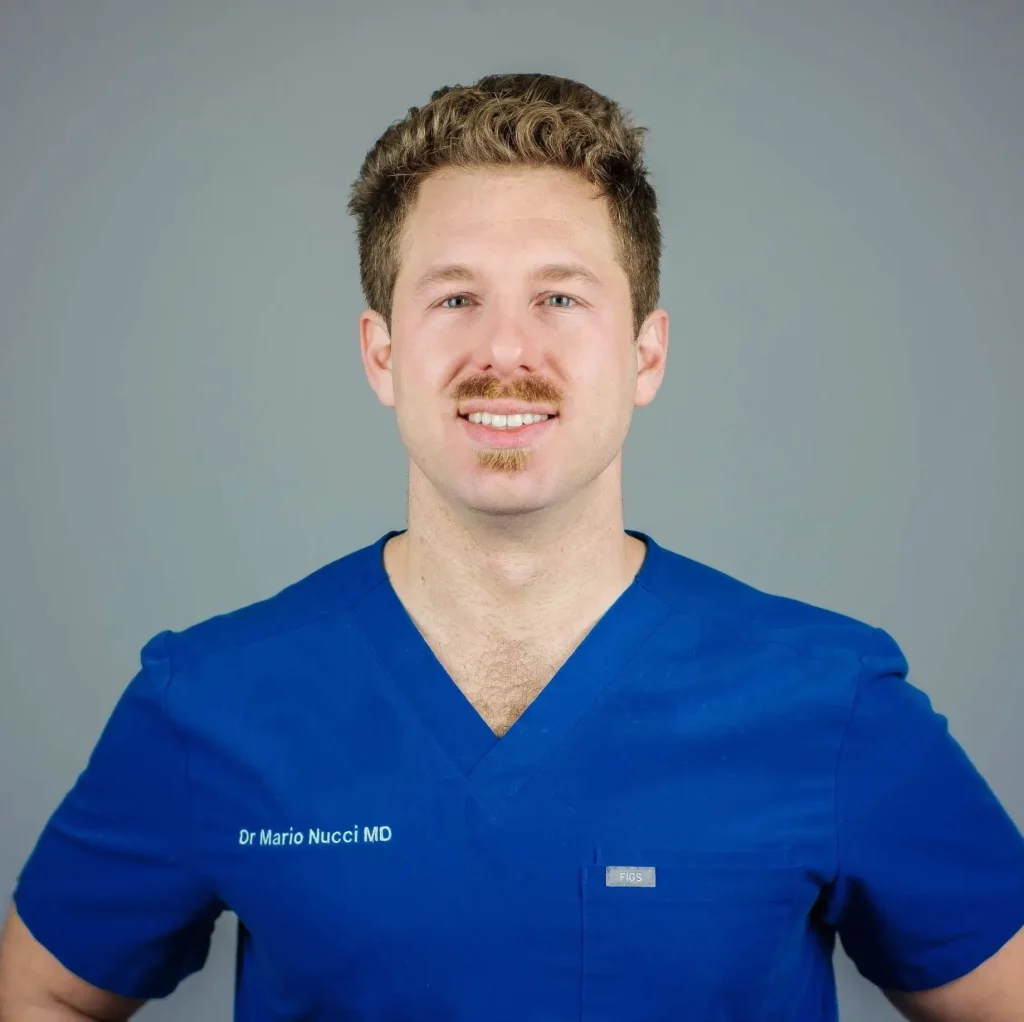
Dr. Mario Nucci MD CCFP is a licensed Family Physician with a passion for mental health and the development of new therapies. He is actively engaged in research with a faculty associate professorship at Northern Ontario School of Medicine, and research collaborations with the University of Ottawa, University of Calgary, Lakehead University, Concordia University and Vancouver Island University.
Dr. Nucci is the founder of Bay and Algoma Health Centre in 2019, a walk-in and addiction medicine clinic. He founded the Canadian Centre for Psychedelic Healing in 2019, now operating as Field Trip Health, providing cutting edge mental health care, including ketamine therapy, in Toronto, Montreal, Vancouver, Ottawa, Hamilton, Kitchener-Waterloo, Thunder Bay, and Sault Ste. Marie.
If you are in crisis or thinking about suicide, call or text 9-8-8 any time, or call 911.
 EN
 FR