


The quick answer: A stellate ganglion block (SGB) for PTSD is a local anesthetic injection around the stellate ganglion, a nerve cluster in the neck. Those nerves control fight-or-flight, so temporarily blocking them can reduce hypervigilance, anxiety and sleep problems. SGB can also ease upper-body pain, including complex regional pain syndrome. It is usually considered when standard treatments haven’t helped, ideally alongside therapy.
Stellate ganglion block (SGB) is an innovative procedure in Canada that targets the sympathetic nervous system and offers hope for those who’ve exhausted traditional therapies. Whether you’re facing complex regional pain syndrome, post-traumatic stress disorder (PTSD), or debilitating head and neck pain, a stellate ganglion block could be the breakthrough you’ve been searching for. Let’s explore how this cutting-edge treatment is reshaping pain management and mental health care across Canada.
What is a Stellate Ganglion Block?
A stellate ganglion block (SGB) is an interventional pain relief and management technique gaining traction in Canada. It targets the stellate ganglion, a cluster of sympathetic nerves in the neck, injecting a local anesthetic to temporarily “block” their function. This can reduce pain signals and reset the sympathetic nervous system’s activity.
SGB is particularly effective for conditions involving the head, neck, upper chest, and arms, showing promise in treating complex regional pain syndrome (CRPS) and post-traumatic stress disorder (PTSD).
Anatomy of the Stellate Ganglion
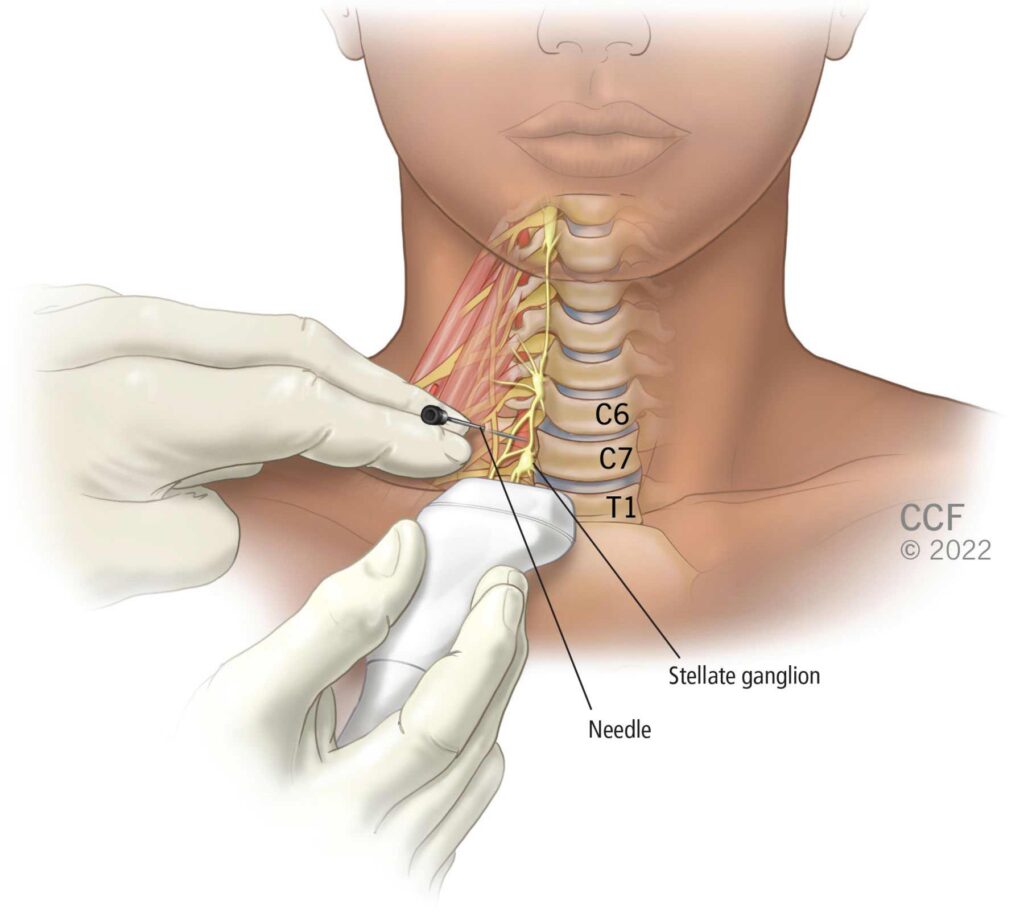
The stellate ganglion is a star-shaped cluster of nerve cells located in the neck, part of the sympathetic nervous system that controls our “fight or flight” response. Understanding its precise location is crucial for SGB’s success, and Field Trip Health uses advanced imaging techniques like ultrasound or fluoroscopy for accurate needle placement.
Conditions Treated with Stellate Ganglion Block
SGB has shown effectiveness in treating various conditions resistant to conventional therapies.
Complex Regional Pain Syndrome (CRPS)
CRPS often affects one limb after an injury. SGB has proven effective for upper extremity CRPS, significantly reducing pain intensity and improving function. Many patients report decreased swelling and improved mobility after treatment.
Stellate Ganglion Block for PTSD
SGB shows promising results in treating combat-related PTSD by resetting the fight-or-flight response. Patients often report improvements in symptoms such as hyper-vigilance, anxiety, and sleep disturbances.
Peripheral Vascular Disease
For patients with peripheral vascular disease, SGB can promote vasodilation and improve blood flow, alleviating pain and circulation issues in the upper extremities.
Ventricular Arrhythmias
SGB has emerged as a potential treatment for refractory ventricular arrhythmias, stabilizing heart rhythms when standard treatments have failed.
Who Stellate Ganglion Block for PTSD May Suit
If you live with PTSD, you may know the feeling of a body that won’t stand down: a jolt at every loud noise, nights spent half-awake, a chest that tightens before you even know why. That’s your fight-or-flight system stuck in the “on” position, a bit like a smoke alarm that goes off every time someone makes toast. It is not a weakness or a character flaw. It’s a nervous system that learned to protect you and hasn’t yet been told it can rest.
That overactive system is exactly what SGB targets. A 2020 randomized trial in active-duty U.S. service members found that two SGB treatments reduced PTSD symptoms more than a sham procedure, and its authors say further trials are needed. At Field Trip, we’re proud to work closely with our Canadian veteran population, first responders, healthcare workers, and Indigenous communities, and SGB is one option we can talk through with you.
Wondering if SGB could help your PTSD or pain? Speak with our Care Team to ask your questions and see if it could be a fit for you.
When Stellate Ganglion Block May Not Be the Right Fit
SGB isn’t for everyone, and a good provider will tell you so. The 2020 trial of stellate ganglion block for PTSD studied active-duty service members whose symptoms were mostly mild to moderate, so the research says less about other situations. If you also live with a brain injury, substance use or another mental health condition, raise it openly during your medical evaluation so your Care Team can decide whether SGB is a good fit.
If you’re having thoughts of suicide, please don’t wait for a procedure. In Canada you can call or text 9-8-8 at any time, day or night.
The SGB Treatment Procedure
The SGB procedure involves careful preparation and execution.
Preparation for Stellate Ganglion Blockade
Before the procedure, we conduct a thorough medical evaluation. On the day of the procedure, you’ll be asked to avoid eating or drinking for several hours, wear comfortable clothing, and arrange for someone to drive you home afterward.
Techniques: Ultrasound, Fluoroscopy, and CT Guidance
We utilize advanced imaging techniques for precise needle placement. Ultrasound-guided SGB is preferred for real-time visualization, while fluoroscopy and CT guidance may be used in complex cases.
What to Expect During the Procedure
You’ll be positioned comfortably, and a local anesthetic will be applied to minimize discomfort. Once the needle is positioned, a small amount of local anesthetic is injected around the stellate ganglion, often resulting in a warm sensation. The procedure typically takes 15-30 minutes.

Benefits of Stellate Ganglion Block for Canadians
SGB offers significant benefits for Canadians struggling with chronic pain and anxiety-related conditions.
Stellate Ganglion Block Pain Relief: Head, Neck, Upper Arm and Chest
SGB effectively interrupts pain signals in the upper body, resulting in immediate pain reduction. Patients with chronic headaches and neck pain often experience substantial relief.
“Resetting” Neurotransmitters for Anxiety Reduction
SGB can “reset” the brain’s neurotransmitter balance, significantly reducing anxiety symptoms. Many patients with PTSD report improved emotional stability and sleep quality post-treatment.
It’s most effective when combined with comprehensive treatment plans, including psychological support.
Stellate Ganglion Block Side Effects and Risks
While SGB is generally safe, patients should be aware of potential risks and side effects.
Common Side Effects of SGB
Most side effects are temporary, including drooping eyelids, eye redness, and warmth in the treated arm and face. These typically resolve within hours. Patients may also experience temporary hoarseness or nasal congestion.
Rare Complications
Rare complications can occur, such as infection, bleeding, or accidental injection into nearby structures. Risks are minimized through imaging guidance. Patients should inform their doctor of any unusual symptoms post-procedure.
Effectiveness of Stellate Ganglion Block
Research increasingly supports SGB’s effectiveness for conditions like PTSD and chronic pain syndromes.
Stellate Ganglion Block for PTSD: Clinical Studies and Research
Recent studies show significant reductions in PTSD symptoms after SGB. Additionally, systematic reviews demonstrate SGB’s efficacy in treating CRPS, aligning with my clinical observations of improved patient outcomes.
A key study is a 2020 multisite randomized clinical trial in JAMA Psychiatry of stellate ganglion block for PTSD. It randomized 113 active-duty U.S. service members to two SGB injections two weeks apart or to a sham (placebo) procedure. After eight weeks, PTSD symptom scores on a 0-80 scale dropped by an average of 12.6 points with SGB, compared with 6.1 points with the sham. The authors are careful: most participants had mild to moderate symptoms and follow-up was short, so they say further trials are warranted.
It’s worth seeing the whole picture. Cleveland Clinic describes the research on SGB for PTSD as mixed: some people’s symptoms improve while others see no change, and the U.S. Food and Drug Administration hasn’t approved SGB for PTSD. For CRPS, a 2016 Cochrane review found the evidence on sympathetic blocks too limited and low in quality to draw firm conclusions. Honest research doesn’t take hope away. It helps you walk in with clear expectations.
Patient Testimonials
Patient experiences often provide compelling evidence of SGB’s effectiveness. Many report reduced anxiety and improved sleep quality. One veteran described SGB as “like a switch being flipped,” dramatically decreasing hypervigilance and nightmares.
When Stellate Ganglion Block Isn’t Enough
Not everyone responds to SGB, and for some people the relief fades and a repeat is needed. If that’s you, it doesn’t mean you’ve failed or that nothing will help. It means your plan needs more than one tool, and SGB is most effective when combined with psychological support.
Stellate Ganglion Block vs Talk Therapy and Other PTSD Treatments
SGB and talk therapy work on different levels. SGB is a short procedure that aims to quiet your body’s fight-or-flight response, while therapy helps you work through what happened and build new ways to respond. Talk therapy and medication remain the recommended first-line treatments for PTSD, and researchers are still studying where SGB fits alongside them. Think of SGB as something that may turn the volume down so the work of healing feels more possible.
At Field Trip, psychotherapy is $180 a session, needs no referral, and your first appointment is usually within a week. Some clients who can’t get where they want with therapy alone go on to psychedelic-assisted therapy with the same therapist, so you never have to retell your story to someone new.

Accessing Stellate Ganglion Block in Canada
Accessing SGB in Canada involves navigating the healthcare system.
Finding Qualified Practitioners
Start by consulting your family doctor or a pain specialist for a referral. When choosing a provider, ensure they have specific experience performing SGB for mental health indications, not just pain management. Look for interventional radiologists or anesthesiologists who are trained in ultrasound-guided or fluoroscopy-guided SGB, as proper technique is essential for both safety and effectiveness.
Questions to Ask a Stellate Ganglion Block Provider
Before you book, it helps to walk in with a short list. You’re allowed to ask every one of these:
- How many SGB procedures have you performed for PTSD and other mental health concerns, not just pain?
- Do you use ultrasound, fluoroscopy or CT guidance, and who performs the injection?
- Do you use a single injection or a dual approach, and why?
- What side effects should I expect in the first few hours, and who do I call if something feels wrong?
- When is my follow-up, and how do you decide whether I need a repeat?
- How will SGB fit with the therapy or other support I’m getting?
- What will it cost, and is any part of it covered in my province?
Insurance Coverage and Costs
Coverage for SGB (Stellate Ganglion Block) varies by province and is generally limited when used for mental health indications. While it may be covered if deemed medically necessary for other conditions, coverage for outpatient mental health applications is rare. Our team can typically schedule your procedure within the same week, and it’s performed by experienced interventional radiologists. If you’re exploring SGB, make sure you choose a provider who has specific experience with this procedure for mental health treatment.
Aftercare and Follow-Up
Proper aftercare and follow-up are crucial for maximizing benefits post-SGB.
Post-Procedure Care Instructions
Rest for about 30 minutes after the procedure. Avoid strenuous activities for 24 hours and apply ice to the injection site if needed. Monitor for any signs of infection.
Monitoring Progress and Potential Need for Repeat Treatments
A follow-up appointment is typically scheduled within 1-2 weeks to assess treatment response. Keeping a symptom diary can help gauge effectiveness. The duration of SGB effects varies; some may require repeat procedures for sustained benefits, especially for chronic conditions.
How Long SGB Relief Lasts and How Many Treatments You May Need
There’s no single answer. According to Cleveland Clinic, how long relief lasts is different for each person: some people are pain-free for days or weeks, and relief tends to last longer with each treatment. Many people need a series of injections, sometimes only two and sometimes more than 10. In the main PTSD trial, people received two injections two weeks apart. Your follow-up visit is the time to decide, together, whether another one makes sense for you.
Stellate Ganglion Block in the Future
As a physician dedicated to innovative pain management and mental health treatments, I’ve witnessed the transformative power of stellate ganglion block (SGB) for many Canadians. This procedure offers hope for those grappling with chronic pain and anxiety-related conditions resistant to conventional therapies. SGB uniquely alleviates head, neck, upper arm, and chest pain while resetting neurotransmitters to ease anxiety. While not a magic bullet, its potential to disrupt the cycle of pain and anxiety can be life-changing, allowing patients to engage more fully in therapies and daily activities. If you’re facing these challenges, discuss SGB with your healthcare provider—it could unlock a more balanced life.
Frequently Asked Questions About Stellate Ganglion Block for PTSD
The stellate ganglion is a star-shaped cluster of sympathetic nerve cells in the front of the neck, near the first ribs, with one on each side. These nerves help control the body’s fight-or-flight response, which is why they are the target of a stellate ganglion block (SGB).
A stellate ganglion block for PTSD injects a local anesthetic around the stellate ganglion, temporarily blocking the nerves that drive the fight-or-flight response so it can reset. Some patients report less hypervigilance, less anxiety and better sleep. Research results are mixed and still growing, so SGB works best alongside psychological support.
How long the relief from a stellate ganglion block lasts is different for each person, and it tends to last longer with each treatment. A follow-up visit 1-2 weeks later checks your response, and some people need repeat blocks, especially for chronic conditions. The temporary side effects usually wear off within hours.
Most side effects of a stellate ganglion block are temporary and fade within hours: a drooping eyelid, red eye, warmth in the face and arm, hoarseness or a stuffy nose. Rare complications include infection, bleeding or injection into nearby structures. Ultrasound or fluoroscopy guidance helps lower these risks.
SGB (stellate ganglion block) treatment is a 15-30 minute procedure: the skin is numbed, then ultrasound or fluoroscopy guides a needle to inject local anesthetic near the stellate ganglion. A warm sensation is common. Fast for several hours beforehand, bring a driver home, then rest about 30 minutes and skip strenuous activity for 24 hours.
Public coverage for a stellate ganglion block in Canada varies by province and is rare when the block is used for mental health. Field Trip is private pay. Our team can usually schedule SGB within the same week, performed by experienced interventional radiologists. Start with a free discovery call.
Wondering if stellate ganglion block could help you?
A short discovery call with our Care Team is a chance to share what you’ve been dealing with, ask about the procedure and see whether SGB could be a fit for you.
Prefer to talk first? Call 1-888-838-6004 or contact us. Field Trip has clinics across Ontario, BC and Quebec, plus online sessions across Ontario, BC and Quebec.
Field Trip Health offers additional alternative treatments for treatment-resistant depression, anxiety, PTSD, and other mental health disorders such as Stellate Ganglion Block therapy, psychedelic-assisted therapy, Neurofeedback therapy, and repetitive Transcranial Magnetic Stimulation (rTMS).
About the Author

Dr. Mario Nucci MD CCFP is a licensed Family Physician with a passion for mental health and the development of new therapies. He is actively engaged in research with a faculty associate professorship at Northern Ontario School of Medicine, and research collaborations with the University of Ottawa, University of Calgary, Lakehead University, Concordia University and Vancouver Island University.
Dr. Nucci is the founder of Bay and Algoma Health Centre in 2019, a walk-in and addiction medicine clinic. He founded the Canadian Centre for Psychedelic Healing in 2019, now operating as Field Trip Health, providing cutting edge mental health care, including ketamine therapy, in Toronto, Montreal, Vancouver, Ottawa, Hamilton, Kitchener-Waterloo, Thunder Bay, and Sault Ste. Marie.
 EN
 FR