


This article is for educational purposes only. Field Trip Health does not provide psilocybin- or MDMA-assisted psychotherapy. These substances remain controlled in Canada and are not approved for routine therapeutic use. The information below summarizes publicly available research and legal distinctions to help readers understand the evolving field of psychedelic-assisted psychotherapy.
Interest in psychedelics for therapy is growing, and people have questions. How do different psychedelic substances like legal psychedelics, “shrooms,” ibogaine, and MDMA compare? What about legal psychedelics vs psilocybin for therapy? What is legal, and what is not? What is it like to trip?
While every therapeutic experience is unique, a few key distinctions between these medicines can be made. Here we explore what research has revealed about legal psychedelics and psilocybin, while noting that only anesthetic, used for its psychedelic effects, is legally available in Canada for therapeutic use under appropriate medical supervision.
What Distinguishes Legal Psychedelics vs Psilocybin?
Legal psychedelics and psilocybin are different types of drugs
The only legal psychedelic in Canada is a dissociative anesthetic with psychedelic properties, while psilocybin is a tryptamine psychedelic. This means that while the two medicines both have the potential to produce feelings of connection, insights, and mystical experiences in some people, the way in which they go about doing so is different and, for psilocybin, remains under active investigation.
Are there legal differences between legal psychedelic medicine and psilocybin?
Is the legal psychedelic a Controlled Substance?
Yes – it is a dissociative anesthetic that has been used safely for decades in hospitals and emergency medicine when administered appropriately. In recent years, it has been prescribed off-label under medical supervision for treatment-resistant depression and related conditions.
Psilocybin, on the other hand, was outlawed for general use in the United States in 1970 with the Controlled Substances Act; Canada promptly followed suit in 1975 with their own Controlled Drugs and Substances Act (CDSA).
Legal psychedelics and psilocybin have different histories
Our anesthetic was developed in 1962 by chemist Calvin L. Stevens. Its original purpose was to be a safer option than other anesthesia options of that time. It has since been studied for a wider range of applications including as a possible catalyst for therapy.
Psilocin, the precursor to psilocybin, occurs naturally in certain fungi worldwide. Once ingested, psilocin is converted into psychoactive psilocybin in the body. While its availability in nature has lended well to ceremonial use throughout history, getting a precise dose from natural sources can be challenging and may carry additional risks outside regulated settings.
Legal psychedelics and psilocybin are taken in different ways
One can be administered in a number of different ways such as IM injection, IV infusion, intranasally, and orally. In current research trials, psilocybin is typically only consumed orally.
Psilocybin journeys are longer than those of legal psychedelics
A legal psychedelic journey is substantially shorter than most psilocybin trips. While legal journeys average about 40 minutes, a person who has ingested psilocybin will likely feel the effects for 3-5 hours. Similarly, the effects of legal psychedelics usually onset in under 10 minutes, while psilocybin can take up to an hour to take effect.
The psychedelic anesthetic and psilocybin have different effects on the body and mind
We are still learning about how psychedelics affect humans’ body and mind, however we do know a few things about how these medicines interact with key chemicals in the brain. For example, the anesthetic seems to work mostly on a person’s glutamate levels, and, in research and clinical practice, has been observed to rapidly reduce suicidality and depression symptoms in some patients. In contrast, psilocybin appears to work by mimicking serotonin, a neurotransmitter that is often targeted by antidepressant medications, although its therapeutic role remains investigational.
How the Anesthetic and Psilocybin are Similar
Both the anesthetic and psilocybin can produce a psychedelic trip
One paper by Vollenweirder and Kometer (2010) comparing the two saw that psilocybin journeys produced slightly more visual alterations and imagery, while anesthetic journeys often included a slightly greater sense of unity. Nevertheless, both the anesthetic and psilocybin can produce mystical, insight-giving, and transcendental experiences, which may include visuals, physical sensations, messages, or other perceptual changes during the peak of the trip in some individuals.
Legal Psychedelics vs. Psilocybin for Therapy: Do both have positive mental health benefits?
Research on the anesthetic has focused on depression, suicidality, and certain anxiety-related conditions. Psilocybin research has examined its potential role in depression, addiction, and end-of-life distress, but it remains investigational. Both compounds are being explored for their possible impact on mental health, though only one is currently approved for clinical use in Canada. They are both being investigated as potential treatments for trauma-related disorders, chronic pain, and substance use disorders, with psilocybin’s use confined to research and other highly regulated pathways where permitted.
There are potential side effects to both the anesthetic and psilocybin
In research and clinical literature, the anesthetic- and psilocybin-assisted psychotherapy have been associated with similar risks and side effects such as blood pressure and heart rate changes, which may make them not appropriate approaches for certain individuals with chronic, unmanaged heart health conditions.
Bottom Line on Legal Psychedelic Therapy vs. Psilocybin Therapy
As interest in psychedelic therapy grows, the anesthetic- and psilocybin-assisted psychotherapy are among the leading areas of research. Studies to date suggest that both may have potential to relieve difficult-to-treat mental health symptoms in some individuals. That said, there are key differences in medicine legality, function, and experience that affect outcomes and accessibility. As interest in psychedelic research grows, both legal psychedelics and psilocybin are important areas of study, with psilocybin remaining investigational and not approved for routine therapeutic use.
Current evidence supports the use of legal psychedelics, in combination with psychotherapy, as a legal treatment option when delivered under professional supervision, with growing data suggesting potential benefits for certain mental health conditions. Psilocybin therapy remains investigational and is not legally available in Canada outside authorized clinical trials or other narrowly defined pathways. If you are exploring mental health treatment options, speak with a licensed provider about approved and evidence-based therapies available today.
Anesthetic & Psilocybin At a Glance
| Anesthetic (Legal Psychedelic) | Psilocybin | MDMA | |
| Also Known As | Special K, Horse Tranquilizer, Spravato, Ket | Shrooms, Magic Truffles, Magic Mushrooms | Molly, Ecstasy, X |
| Drug Class | Dissociative anesthetic | Tryptamine psychedelic | Empathogen, Entactogen, Stimulant |
| Legality | Legal in the US, Canada, and several other countries. | Available only in authorized research settings. | Available only in authorized research settings. |
| Route of Administration | IM injection, IV infusion, by mouth, nasally | By mouth | By mouth, nasally |
| Journey Onset | 0-10 minutes (IM/IV) | 30 minutes – 1 hour | 30-45 minutes (by mouth) |
| Journey Length | About 40 minutes (IM) | 4-6 hours | 3-6 hours |
| Made From | Synthetic manufacturing | Psilocybin-containing mushrooms and truffles | Synthetic manufacturing |
| Hypothesized Method of Action | Affects the neurotransmitters glutamate and GABA, increases neuroplasticity | Mimics the neurotransmitter serotonin, increases neuroplasticity | Affects the neurotransmitters dopamine, serotonin, and norepinephrine. |
| Uses | The anesthetic has mostly been studied to reduce suicidality and symptoms of depression, however clinical usage has found it to be effective also against anxiety and trauma disorders. | Research shows that psilocybin may be effective at treating addiction, depression, and reducing death anxiety. Psilocybin has also historically been used in spiritual contexts across the globe. | Research with MDMA has principally looked at its ability to treat psychological trauma and improve relational functioning. |
Legal Psychedelic Therapy is available across Canada, including in Toronto, Vancouver, Montreal, Ottawa, Hamilton, Sault Ste Marie, Thunder Bay, Kitchener-Waterloo, and even at-home.
Field Trip Health Toronto offers additional alternative treatments for treatment-resistant depression, anxiety, PTSD, and other mental health disorders such as Stellate Ganglion Block therapy, Neurofeedback therapy, and repetitive Transcranial Magnetic Stimulation (rTMS)
About the Author
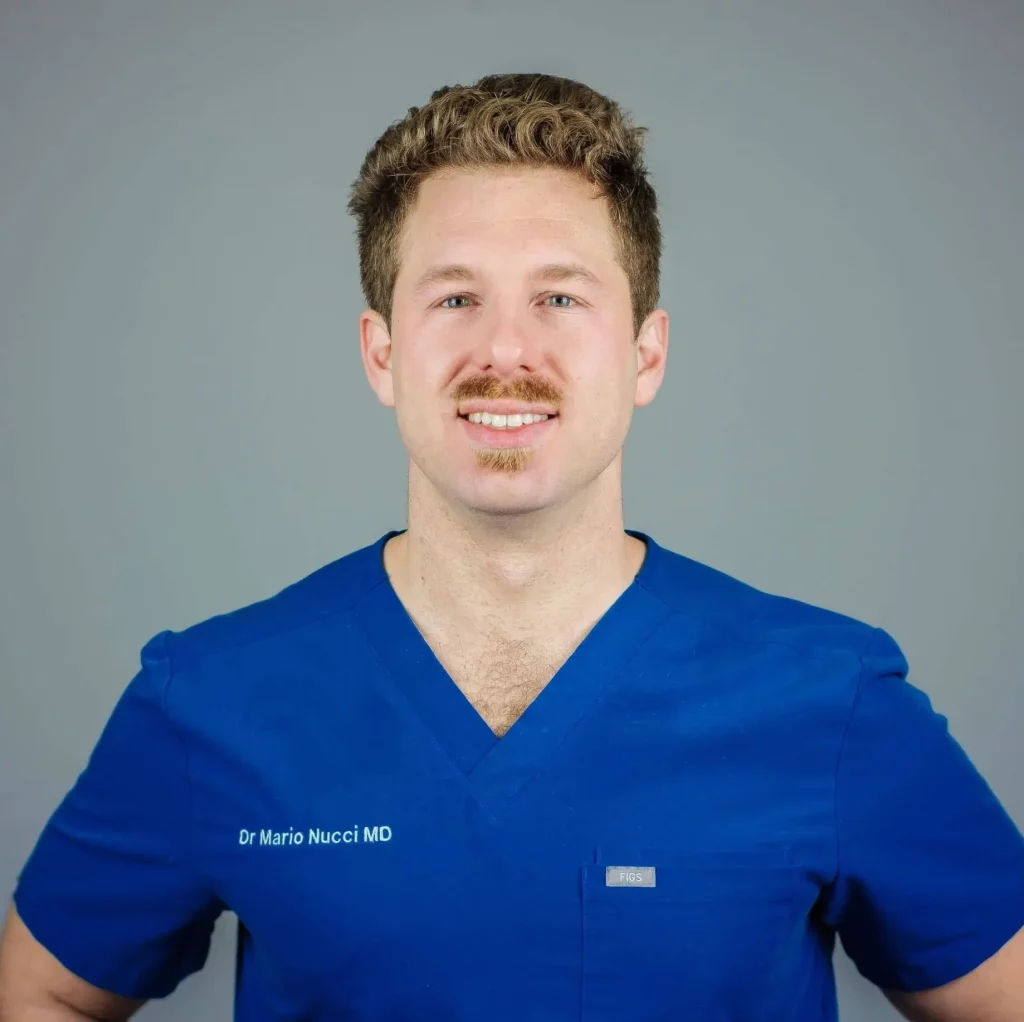
Dr. Mario Nucci MD CCFP is a licensed Family Physician with a passion for mental health and the development of new therapies. He is actively engaged in research with a faculty associate professorship at Northern Ontario School of Medicine, and research collaborations with the University of Ottawa, University of Calgary, Lakehead University, Concordia University and Vancouver Island University.
Dr. Nucci is the founder of Bay and Algoma Health Centre in 2019, a walk-in and addiction medicine clinic. He founded the Canadian Centre for Psychedelic Healing in 2019, now operating as Field Trip Health, providing cutting edge mental health care in Toronto, Montreal, Vancouver, Ottawa, Hamilton, Kitchener-Waterloo, Thunder Bay, Sault Ste. Marie, and at-home.
 EN
EN  FR
FR